
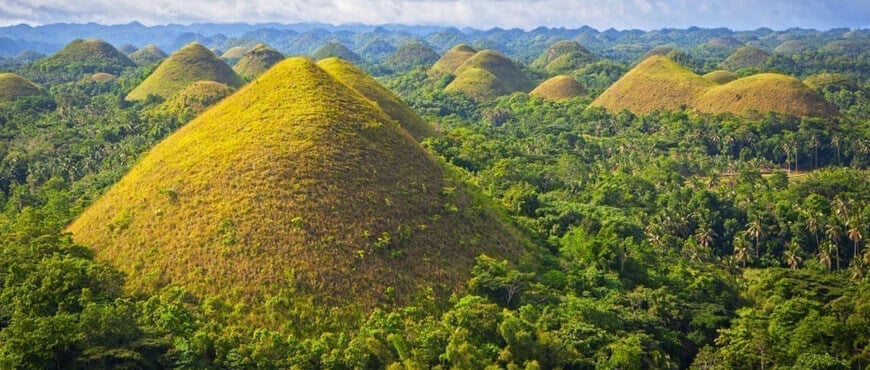
Nestled in the heart of the Philippines’ Bohol Province, the Chocolate Hills are a geological phenomenon that captivates visitors with their unique and intriguing landscape. The Chocolate Hills in Bohol, Philippines, are a famous tourist attraction known for their unique geological formation of at least 1,268 individual mounds scattered throughout the area. These hills turn brown during the dry season, resembling chocolate kisses, hence the name. These famous hills are not only a national geological monument but also considered one of the country’s most iconic natural wonders.
Viewing Decks
To get the best views of the Chocolate Hills of Bohol, there are several viewing decks that visitors can access:
1. Chocolate Hills Complex
- Located in Carmen, Bohol island, this is the main viewing deck.
- Offers a panoramic view of the hills from an elevated platform after climbing up a flight of stairs.
- Facilities include a restaurant and souvenir shops.
2. Sagbayan Peak
- Another popular viewing site is located in Sagbayan, a town approximately 20 kilometers from Carmen.
- Provides a different perspective of the hills and includes a park with a children’s playground and picnic areas.
Both sites provide ample opportunities for photography and enjoying the scenic views of this natural wonder.
Origins and Geological Formation
The formation of the Chocolate Hills is a subject of scientific interest and various theories have been proposed to explain their existence. The most widely accepted theory suggests that these hills are the weathered formations of a kind of marine limestone that sits atop an impermeable layer of clay. Approximately two million years ago, during the Pleistocene era, the uplift of coral deposits and the action of rainwater and erosion sculpted these limestone deposits into the peculiarly uniform shapes we see today.

These hills vary in size from 30 to 120 meters in height and are almost symmetrical in shape. During the dry season, the grass-covered hills dry up and turn from green to brown, transforming the landscape into what looks like endless rows of chocolate kisses, hence their name.
Ecological and Environmental Aspects
The hills are not only a geological marvel but also host a diverse ecosystem. The vegetation on the hills is mostly grass, which becomes lush green during the wet season. The surrounding areas support a more diverse flora including hardwood trees, rice paddies, and various crops grown by local farmers.
The region’s biodiversity extends to its wildlife, which includes numerous species of birds, insects, and small mammals. This biodiversity is crucial not only for environmental balance but also supports local agriculture by pollinating plants and controlling pests.
Cultural Significance
For the people of the province of Bohol, the Chocolate Hills are steeped in legend and folklore. One popular tale tells of two feuding giants who hurled rocks, boulders, and sand at each other. The fighting lasted for days, and when they finally tired, they left the mess they had created – which then turned into the Chocolate Hills.
Another story involves a heartbroken giant named Arogo who cried when his mortal love died. His tears supposedly formed the hills. These legends reflect the deep cultural connection between the local community and this natural wonder, adding a rich layer of mythology to the landscape.
Economic Impact and Tourism
Tourism plays a vital role in the local economy due to the attraction of the Chocolate Hills. Visitors can explore the area through various viewing sites, with the main complex located near the town of Carmen. This site provides panoramic views accessible via a staircase leading to an observation deck atop one of the hills.
The influx of tourists has spurred development in nearby areas, including hotels, restaurants, and souvenir shops. Local crafts and products are often sold, providing income for many families in the region. However, this economic benefit comes with challenges such as managing tourist impact on the environment and ensuring that development does not detract from the natural beauty or ecological health of the hills.

Conservation Efforts
Given their importance, conservation efforts are critical in preserving both the aesthetic and ecological value of the Chocolate Hills. The government has implemented measures to protect this unique landscape through regulations that limit development and manage tourist activities. Environmental awareness campaigns are also conducted regularly to educate visitors about the importance of maintaining the natural environment.
Local communities play an active role in these conservation efforts. Many residents are involved in initiatives that promote sustainable tourism practices and protect natural resources. These community-led efforts are crucial in ensuring that the Chocolate Hills can be enjoyed by future generations while maintaining ecological balance.
Challenges and Future Directions
While tourism has brought economic benefits to the island of Bohol, it also poses challenges including waste management, environmental degradation, and the impact of increased human activity on wildlife. Balancing economic growth with environmental sustainability is a key challenge for local authorities.
Future plans involve improving infrastructure to better accommodate tourists while minimizing ecological footprints. There is also a focus on promoting eco-friendly tourism practices that encourage visitors to be mindful of their environmental impact.

Best Time to Visit Chocolate Hills
The best time to visit the Chocolate Hills is during the dry season from March to June when the hills are a stunning chocolate brown color. Declared the country’s third UNESCO World Heritage site in 2006, the Chocolate Hills are a must-visit tourist spot in the Philippines.
When planning your trip to Bohol, be sure to also visit the nearby town of Batuan to see the tarsiers and explore the hills adventure activities available. There are many resorts in Bohol and on Panglao Island where you can stay and enjoy the natural beauty of the area. Make sure to research and know before you go about the best ways to get to Bohol and the things to do in Bohol to make the most of your trip.
Chocolate Hills in Bohol Philippines: Conclusion
The Chocolate Hills in the Philippines are more than just an unusual geological formation; they are a symbol of natural beauty and cultural heritage for the Philippines. It is one of the tourist destinations in the Philippines. Their distinctive landscape not only attracts tourists from around the world but also tells stories of geological history, ecological diversity, and cultural myths.
As Bohol continues to navigate the challenges of tourism and conservation, the enduring allure of the Chocolate Hills stands as a testament to the beauty and resilience of nature. For those who visit, these hills offer a unique glimpse into a landscape formed over millions of years and preserved through centuries of human history and cultural significance.
Do you need a Chocolate Hills Tour and a travel guide?


Comments (0):